


In Favour Of The Old Normal
- Alex Beckett

- Apr 7, 2022
- 3 min read
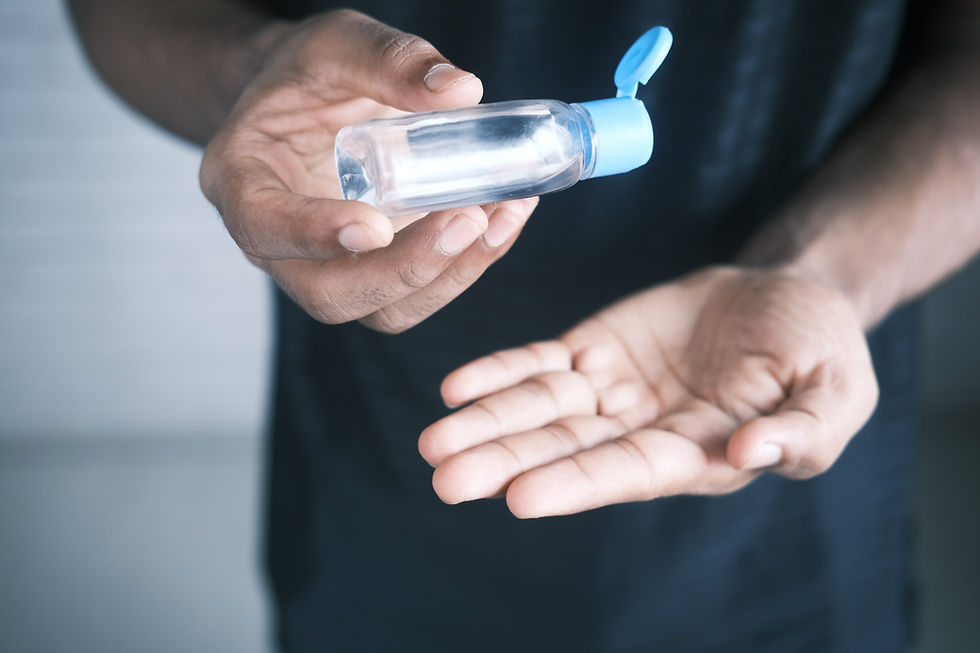
The two years just traversed have naturally left a profound imprint on the face of modern society, instilling a serious anxiety amongst a large chunk of the populace, and bringing therewith serious mental health concerns. National publicity campaigns, which suggested that Britain’s young people were killing their grandmothers, didn’t help. These campaigns were led and waged expressly to stop people living the lives that they did pre-COVID. The justification of this was simple: it was to save the lives of the vulnerable. Now that the sun is rising on the horizon of a world lesser touched by COVID, it is imperative that the effects of this messaging – including the obsessive sanitary mentality that it imposed – are promptly reversed, for the sake of our health.
That ridding ourselves of these self-imposed cleanly habits would benefit our health may come as a surprise. However, such paradox is not without historic precedent. Take the example of smoking on planes, which was well explicated on a by-gone episode of the British intellectual’s panel show, QI. When smoking was permitted on planes, cabin air was entirely replaced every 3 minutes, for if not the cabin began to stink of smoky fumes. Since the banishment of airline smoking, airline companies can (and do) save money by recycling some of the cabin air, ultimately meaning that a reduced proportion of air circulating the cabin is fresh. Consequently, carbon monoxide levels on board rise, which can trigger nauseous side effects, and the air isn’t as often replenished as it could be – but we don’t complain, as long as we don’t smell cigarette smoke. This is an example of a ‘pro-health’ action that may paradoxically have a negative effect on our health.
Forcing ourselves to follow COVID measures, even as the pandemic reaches its end, would be sure to have a similarly paradoxical effect, in which quality of life is sacrificed unnecessarily. I propose that such sacrifice would hit hardest our happiness and our immune systems. On the latter point of immune systems, I don’t think a lot of explanation is required; we’ve all felt ill and then, almost miraculously, felt better. Our body is an excellent combatant when it comes to viruses and bacteria. But like any combatant, it needs training and practice to be at its best. If we eradicate from circulation even the most menial of sniffles, the body will have a worse chance when it must defend itself against more pernicious maladies. It is for this reason that I don’t agree with the concept of the eternal mask, as espoused by many of the virtue-signalling types, and that I don’t rue catching the annual winter colds, as they do the rounds.
Happiness is a trickier argument to craft. Basically, it’s a question about how we each view a ‘happy’ society. Personally, I love handshakes. A handshake belongs comfortably in my vision of a happy society. I understand that it’s engrained culturally, similarly to cheek kisses on the Mediterranean, or to bowing in East Asian countries. But I don’t mind this fact; to me it signals in any case a willingness to engage, and an expression of trust. I’m off-put by the notion that we would render taboo the handshake, for fear that it may spread germs. Hugging others spreads germs, talking to others spreads germs, and existing in a shared space – as we all do – spreads germs. Society is already alienated more than it needs to be, encouraging further descent for the sake of dodging a cough won’t help us in the long run.
All the while, those who wish to see the permanent imposition of the new COVID culture repeat how much easier life was under restrictions. It was more tranquil, they say, they didn’t feel the usual anxiety entangled with human interaction. To those people I say that I understand. Other people can appear to us unhygienic, ‘icky’, even downright disgusting. But if you think that way, you already have fallen quite deeply into the vicious circle of sanitised insanity, and it would be a good thing that you are yanked out of it. The only way to do this – not to make the experience less theoretically frightening, but to make yourself braver – is to dive wholeheartedly back into the physical human interaction for which we are destined.
If not now, then when? Amidst the (somewhat reasonable) fearmongering about future pandemics, it’s vital to kick the habits of the past 2 years and live a life befitting of human beings whilst we have the liberty to do so. Such revitalisation need not comprise any debauched revelry, nor shameful orgy – although currently discussing physical health, I am always concerned for the state of our readership’s moral fibres – but merely the meek and moderate gesture of a handshake.
Image: Towfiqu Barbhuiya, Unsplash


Comments